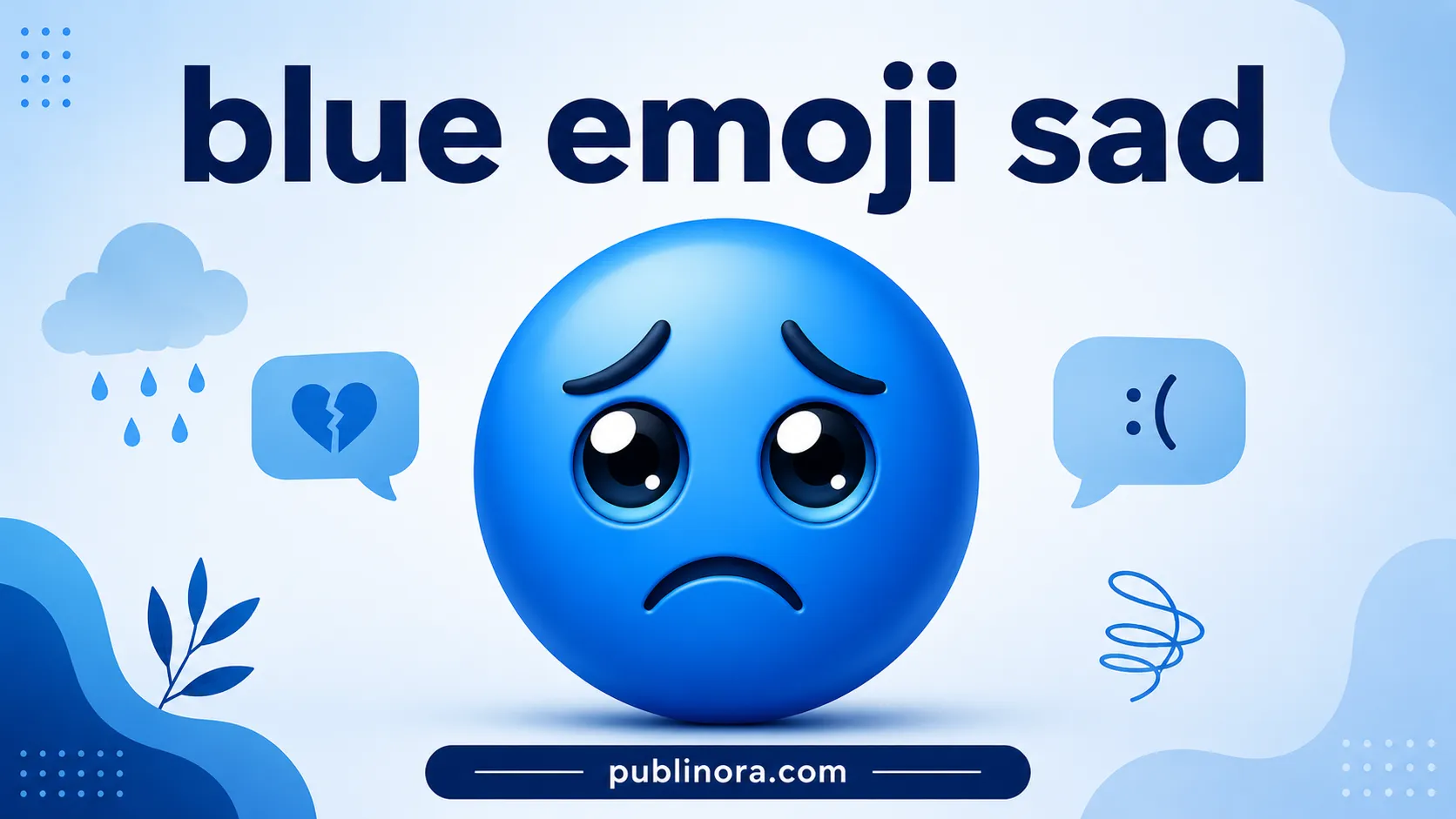
Sometimes one blue or sad emoji can say what words cannot.
You might send a short message after a disappointing day and realize that a simple expression communicates your mood better than a long explanation.
The blue emoji sad search usually points to emojis people use for sadness, disappointment, loneliness, or emotional moments.
Their meaning can shift with the conversation, relationship, and platform. From personal WhatsApp chats to Instagram captions and TikTok comments, these emojis help add emotional tone without making every message sound overly serious.
Sometimes, one tiny blue or sad emoji can quietly express a whole mood.
What do blue emoji sad mean?
The blue emoji sad family includes several expressions that can communicate different levels of sadness or emotional vulnerability. Some feel gentle, while others make a message sound more intense.
Context matters. For example, a sad looking emoji in a serious conversation may express genuine disappointment, while the same emoji in a playful chat can make a reaction feel exaggerated or humorous.
| Emoji | Core meaning | Misread as | Best used when |
| 😢 | Sadness or emotional hurt | Sympathy seeking | You feel genuinely upset |
| 😭 | Strong emotional reaction | Only crying | Something feels overwhelming |
| 😔 | Quiet sadness or reflection | Anger | You are feeling low or thoughtful |
| 😞 | Disappointment or discouragement | Boredom | Something did not go as hoped |
| 🙁 | Mild sadness or concern | Confusion | You want to show a softer negative reaction |
| ☹️ | Noticeable unhappiness | Irritation | You want a clear unhappy response |
| 💙 | Caring or emotional support | Romantic love only | You want warmth or reassurance |
| 🥺 | Vulnerability or pleading | Sadness only | You want a soft, emotional tone |
| 😥 | Worry mixed with sadness | Relief | You feel concerned or emotionally uneasy |
| 😓 | Stress or emotional strain | Happiness | You are describing a difficult moment |
Meaning & Example
😢 Crying Face
Meaning: Shows sadness, emotional hurt, or a need for sympathy.
Example 1: I really miss those days 😢
Example 2: That news made me sad 😢
😭 Loudly Crying Face
Meaning: Expresses a very strong emotional reaction, often involving intense crying.
Example 1: I cannot believe it happened 😭
Example 2: That ending got me 😭
😔 Pensive Face
Meaning: Communicates quiet sadness, disappointment, or a thoughtful low mood.
Example 1: I wish things were different 😔
Example 2: Today feels a little difficult 😔
😞 Disappointed Face
Meaning: Suggests disappointment, discouragement, or feeling let down.
Example 1: I really hoped you could come 😞
Example 2: That did not go as planned 😞
🙁 Slightly Frowning Face
Meaning: Gives a gentle expression of unhappiness, concern, or mild disappointment.
Example 1: I was hoping for better news 🙁
Example 2: That sounds difficult 🙁
☹️ Frowning Face
Meaning: Communicates a stronger feeling of unhappiness or dissatisfaction.
Example 1: I am not happy about this ☹️
Example 2: That was disappointing ☹️
💙 Blue Heart
Meaning: Can add a caring, supportive, calm, or emotionally connected tone.
Example 1: I am here for you 💙
Example 2: Sending you some support 💙
🥺 Pleading Face
Meaning: Adds a vulnerable, emotional, or pleading tone to a message.
Example 1: Please do not be upset 🥺
Example 2: Can we talk about it? 🥺
😥 Sad but Relieved Face
Meaning: Can express emotional worry, discomfort, or a difficult situation.
Example 1: I was really worried about you 😥
Example 2: That was a stressful moment 😥
😓 Downcast Face with Sweat
Meaning: Often adds a sense of stress, pressure, embarrassment, or emotional difficulty.
Example 1: Today has been exhausting 😓
Example 2: I have so much to finish 😓
How to use blue emoji sad the right way
On WhatsApp, these emojis usually work best in personal and emotional conversations. They can soften a serious message, show that you care, or make your reaction feel more expressive.
For example, “I really wish you were here 😔” feels more emotionally open than the same sentence without an emoji. The surrounding words should still make your intended tone clear.
On Instagram, Instagram emojis are often used with captions, comments, Stories, and personal branding. A carefully chosen emoji can support an aesthetic mood without taking over the message.
TikTok tends to use emojis more playfully. A sad looking emoji can sometimes add humor, irony, or dramatic exaggeration to a comment. That means you should read the surrounding text before assuming every emotional emoji is completely serious.
Do:
- Match the emoji with the mood of your message.
- Use combinations sparingly.
- Consider your relationship with the person.
- Let the words provide the main context.
Don’t:
- Add many emotional emojis to every sentence.
- Assume the same emoji always means exactly one thing.
- Use a dramatic reaction when the conversation is genuinely serious.
- Depend on emojis when your message needs clear explanation.
Best blue emoji sad combos copy & paste
Here are simple copy paste emojis combinations using the same core family. They can work in messages, captions, comments, and private chats.
Romantic
👉 💙😔 A gentle emotional message to someone you care about.
👉 🥺💙 A soft, vulnerable reaction in a close conversation.
👉 😢💙 Useful when expressing emotional affection or missing someone.
Cute
👉 🥺😢 A soft, emotional reaction that can feel playful.
👉 🙁🥺 Works when asking for attention in a gentle way.
👉 💙🥺 A warm combination for an affectionate message.
Flirty
👉 🥺💙 Adds a playful, slightly vulnerable tone.
👉 😔🥺 Can make a teasing request sound more dramatic.
👉 🙁💙 A softer way to show that you want someone’s attention.
Missing Someone
👉 😔💙 A simple emotional combination for a heartfelt message.
👉 😢💙 Useful when a conversation centers on missing someone.
👉 😭💙 Adds stronger emotional emphasis to a heartfelt reaction.
Good Night
👉 😔💙 A gentle emotional sign off before sleep.
👉 🥺💙 A soft way to end a personal conversation.
👉 😢💙 Can accompany a sentimental good night message.
Trending blue emoji sad in 2026
In trending emojis 2026, emotional expressions continue to appear naturally in casual digital conversations. Their popularity is not simply about sadness; people also use them for exaggeration, humor, empathy, and conversational tone.
😢 is useful in personal messages and emotional reactions because it communicates a recognizable feeling quickly. Younger users and everyday chatters may also use it when a situation feels unexpectedly touching or disappointing.
😭 frequently appears in TikTok comments, Instagram reactions, and casual messaging where emotions are intentionally exaggerated. It can make a reaction feel dramatic without requiring a long explanation.
🥺 has a softer internet chat style and often appears when someone wants a message to sound vulnerable, playful, or emotionally persuasive. It is especially natural in casual conversations and social media comments.
💙 also works well across Instagram, WhatsApp, and TikTok because it can support supportive or affectionate messages without making every situation sound intensely romantic.
| Emoji | Why trending | Who uses it | Platform |
| 😢 | Quick emotional reaction | Everyday chat users | WhatsApp, Instagram |
| 😭 | Dramatic and expressive reactions | Content creators and younger users | TikTok, Instagram |
| 🥺 | Soft, playful emotional tone | Casual social media users | TikTok, WhatsApp |
| 💙 | Supportive and versatile tone | Friends, creators, communities | Instagram, WhatsApp |
Emoji communication continues to evolve as users adapt familiar symbols for humor, emotion, irony, and changing online conversation styles.
FAQs:
What is the most popular blue emoji sad?
There is no single universal choice because usage depends on context and platform. 😢 and 😭 are commonly recognized for strong emotional reactions.
What does 😢 mean from a girl or boy?
The emoji itself does not have a different meaning based on gender. A person may use it to show sadness, disappointment, sympathy, or an emotional reaction depending on the conversation.
Why do emojis look different on iPhone vs Android?
Apple, Google, Samsung, and other platforms create their own emoji artwork. The underlying Unicode character can be the same, while its visual design, facial expression, or color details may look slightly different.
Are blue emoji sad used differently in other countries?
Yes, context and online culture can influence emoji habits. However, basic emotional interpretations are often understandable across many languages and communities.
Conclusion:
The blue emoji sad family gives everyday messages an easy way to add emotional tone without writing a long explanation. The best choice depends on your words, relationship, and situation.
If you are chatting privately, posting on social media, or reacting to a TikTok, use the emoji naturally and let the surrounding message make your intention clear.

Andrew Parker is a passionate writer and researcher at publinora.com, sharing clear, useful, and engaging content to help readers stay informed and discover fresh ideas.